What is the best air fryer to buy in 2026?
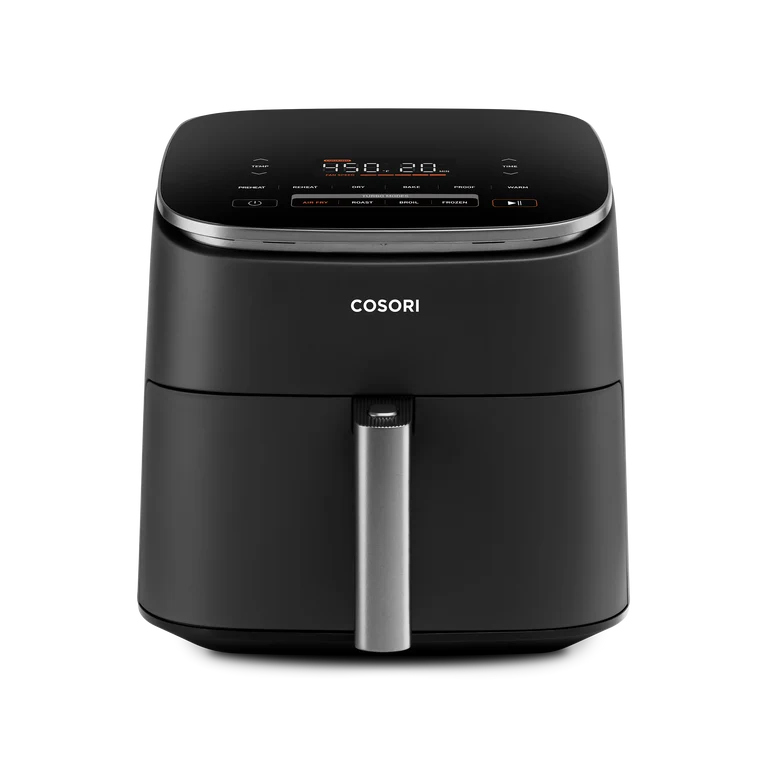
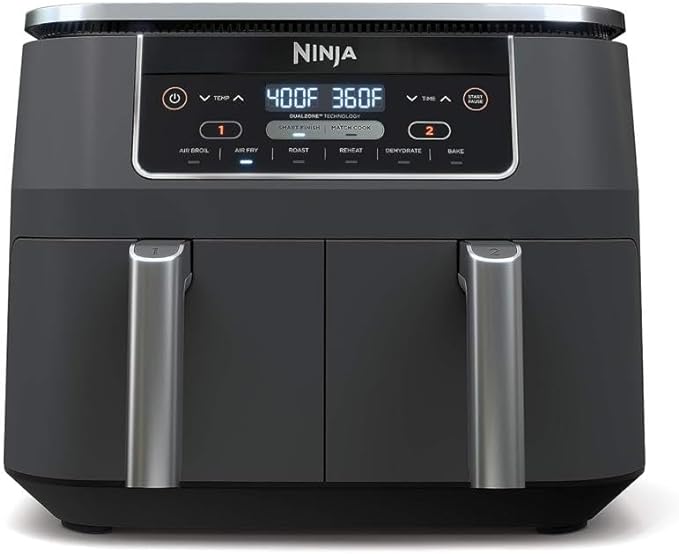
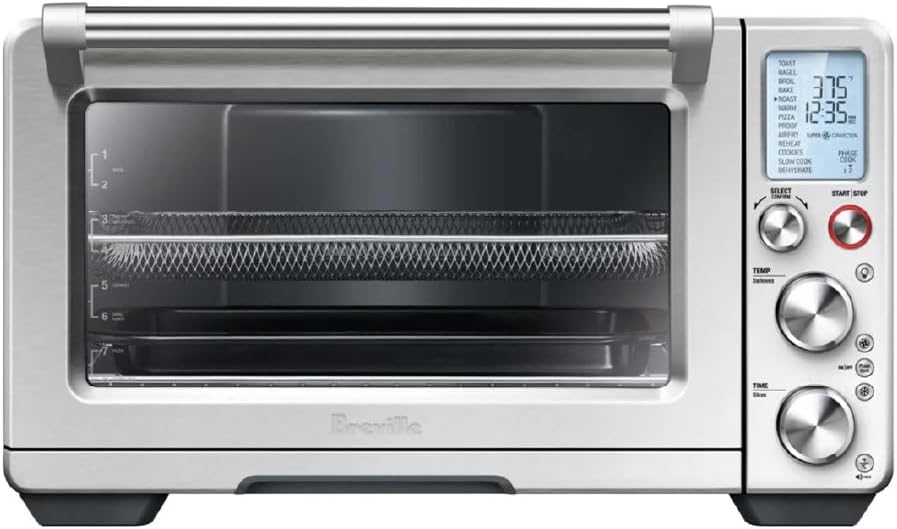
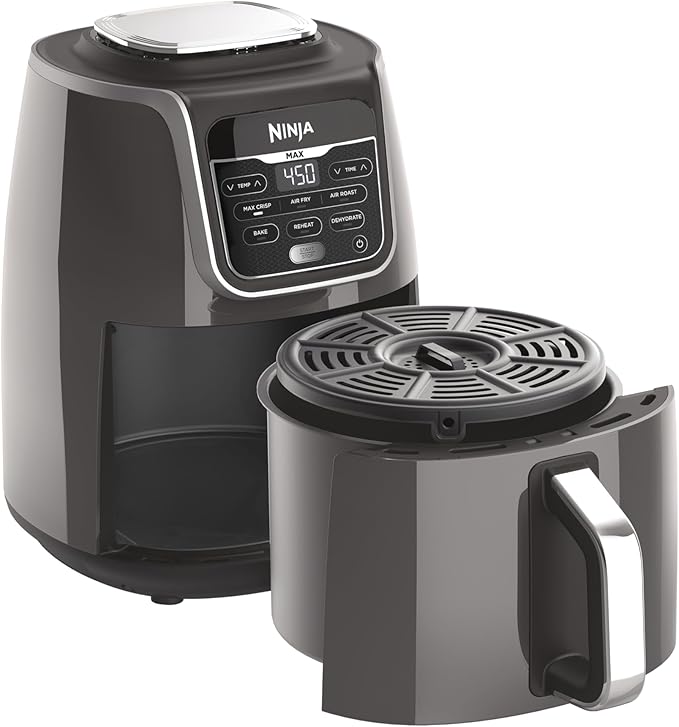
The best air fryer for most households in 2026 is the Ninja AF161 Max XL. It has the highest max temperature on the list (450°F), a 5.5 qt square basket that holds a full meal for 4, and a compact footprint. For beginners who want guided cooking with app recipes, the Cosori Pro Gen 2 is the better choice. Households that cook complete dinners need the Ninja DualZone — two independent baskets that finish at the same time is genuinely transformative for daily cooking. If you want to replace your toaster oven entirely, the Breville Smart Oven Air Fryer Pro covers everything from air frying to slow cooking to 14-lb turkey roasting.
What size air fryer do I actually need?
This is the most important decision and the most common mistake is buying too small. For 1–2 people: 2–4 qt is sufficient for single servings and small batches. For 3–4 people: 5–6 qt is the sweet spot — handles a 3-lb chicken wing batch or a pound of fries without stacking. For 5+ people or meal prep: 6–8 qt or a dual-basket model. The capacity listed on the box is the basket volume, not the usable cooking area — stacking food prevents airflow and produces uneven, soggy results. A properly loaded 5 qt basket holds about the same food as one sheet pan in a conventional oven. If in doubt, size up — an underused large air fryer is much less frustrating than an overloaded small one.
Basket air fryer vs oven-style air fryer — which is better?
Each type suits different cooking styles. Basket air fryers (Ninja AF161, Cosori Pro) are faster to preheat (2–3 minutes), produce crispier results for small batches, and are easier to clean — the basket is dishwasher-safe in most models. Oven-style air fryers (Ninja Foodi XL Pro, Breville Smart Oven) can fit a full sheet pan, handle a whole chicken on a rotisserie, and bake standard-size baking pans — things a basket model simply can't do. Oven-style units also replace more kitchen appliances (toaster, conventional oven for smaller tasks). For quick daily cooking for 1–4 people: basket. For large batches, baking, and full oven replacement: oven-style.
What can you actually cook in an air fryer?
The honest answer is: almost anything that benefits from dry heat and crispiness. Air fryers excel at: frozen foods (fries, nuggets, fish sticks — dramatically better than the oven), fresh chicken (skin comes out genuinely crispy), reheating pizza and fried foods (far better than microwave — the crust stays crispy), roasted vegetables, bacon, and salmon. They are less suited for: anything coated in wet batter (it drips), large roasts over 5 lbs, anything that needs to steam or braise, and pastries that need to rise significantly. If you're currently doing most reheating in a microwave and want actual hot crispy food fast, an air fryer is a meaningful upgrade.
Does air-fried food really taste like deep-fried food?
Honest answer: no, but it's better than the oven for most things. Air frying produces a similar texture to deep frying — crispy exterior with moist interior — but without the oil-soaked depth of flavor. For foods that are already coated or breaded (chicken tenders, spring rolls, frozen fries), the difference from deep frying is minimal and most people can't tell in a blind test. For foods that need to develop a crust from their own fat (skin-on chicken thighs, thick-cut bacon), air frying actually outperforms shallow pan frying. For doughnuts or traditional fried dough, the flavor difference is noticeable. The practical win is convenience and health: 80% of the deep-fried texture with 1 tablespoon of oil instead of a quart.
Single basket vs dual basket: which is better?
Dual basket air fryers like the Ninja DualZone are transformative for households that cook complete meals. The ability to cook chicken and fries simultaneously — each at the right temperature — and have them finish at exactly the same time is genuinely useful on a daily basis. For people who mostly cook for 1–2 people or use the air fryer for snacks and reheating, a single basket is simpler, takes up less space, and is less to clean. The dual basket models are meaningfully larger (plan for 15 inches of counter space) and $50–70 more expensive. The decision: do you use it for complete dinners (dual basket worth it) or as a single-food appliance (single basket is enough)?
How does an air fryer compare to a convection oven?
An air fryer is essentially a small, powerful convection oven with a faster fan. The fan speed is higher, circulating air more aggressively — which is why it gets food crispier faster than a full convection oven. The practical differences: an air fryer preheats in 2–3 minutes vs 10–15 minutes for a full oven, uses significantly less electricity (1.5 kW vs 2.4–4 kW), and fits on a counter. A full convection oven handles larger batches and can bake, roast, and broil larger items. If you're cooking for 2–4 people and don't need to make sheet-pan meals or large roasts frequently, an air fryer replaces most of what a convection oven does at a fraction of the operating cost.
Ninja vs Cosori vs Instant — which air fryer brand is best?
Ninja makes the best air fryers for pure cooking performance — the AF161's 450°F max temperature and the DualZone's dual-basket system are market-leading. Cosori makes the best air fryers for beginners and app-connected users — the app recipe library and guided cooking features are the most polished in the category. Instant (Vortex line) offers the best value — solid build quality and full functionality at consistently lower prices than Ninja or Cosori. Breville makes the best premium oven-style air fryers, with the most even heat distribution. For a first air fryer: Ninja or Cosori depending on whether you prefer performance or guidance. For budget: Instant Vortex.
Is an air fryer worth it if I already have a good oven?
Yes, for two specific reasons. First, speed and convenience: an air fryer preheats instantly and produces crispy results in 8–15 minutes for most foods that would take 20–30 minutes in an oven. Second, it keeps your kitchen cooler — running a full oven for 30+ minutes generates significant ambient heat; an air fryer produces minimal heat. In summer, this alone is worth it. If you already meal-prep large quantities that need sheet pans, or frequently cook large roasts, the air fryer doesn't fully replace your oven. But as a daily-driver for quick meals, reheating leftovers, and making frozen foods actually crispy, it genuinely earns its counter space.
What temperature should I use for common air fryer foods?
Standard temperatures for the most common air fryer foods: Frozen french fries: 380°F for 15–18 minutes, shake halfway. Chicken wings: 400°F for 24–28 minutes, flip halfway. Chicken breast (boneless): 375°F for 16–20 minutes depending on thickness. Salmon fillet: 400°F for 10–12 minutes. Bacon: 350°F for 8–10 minutes. Frozen chicken nuggets: 400°F for 10–12 minutes. Roasted broccoli: 380°F for 8–10 minutes. Reheating pizza: 325°F for 3–4 minutes. Most air fryers allow you to check and adjust mid-cook without affecting results — unlike conventional ovens, opening the basket briefly doesn't significantly drop internal temperature.
How do I clean my air fryer?
For most basket air fryers: remove the basket and drawer, wash with warm soapy water or in the dishwasher (check your model — most baskets are dishwasher-safe). Wipe the interior cavity with a damp cloth while it's still warm to remove grease splatter. The heating element above the food occasionally accumulates grease — unplug the unit, flip it upside down, and clean with a soft brush or cloth after it's completely cooled. Never submerge the main unit in water. Baked-on grease on the basket responds well to a 10-minute soak in hot soapy water before scrubbing. For the Breville oven-style models: the crumb tray is removable and dishwasher-safe; the interior racks soak clean.
What is the best air fryer for a family of 4?
The Ninja AF161 Max XL (5.5 qt) is the best single-basket air fryer for a family of 4 — it handles a 3-lb batch of wings, a pound of fries, or a full chicken breast in one go without stacking. For families who want to cook the whole meal at once (protein + side simultaneously), the Ninja Foodi DualZone 8 qt is better — two baskets let you cook the main and the side at different temperatures and have both finish together. For larger families of 5–6, the dual basket DZ201 or the Ninja Foodi XL Pro oven-style handles the volume. The rule of thumb: 1–1.5 qt of capacity per person is needed for a single-pass family meal.