Robot vacuums · dock automation and remaining work
Choose the robot by the chore you want to stop doing.
An emptying station, a mop-washing dock and a vacuum-only base solve different jobs. Compare three identified configurations by what they automate, what you still do and where the evidence falls short.
By BestOnAmz Research Desk · Last reviewed
Compare the options ↓The decision at a glance
If you want mop washing automated, start with the S5A full dock. If manual mop care is acceptable, compare Q10 S5+ debris auto-emptying. If you handle wet cleaning separately, the vacuum-only j9+ avoids mop hardware. None of these choices earns a promise of unattended small-object or pet-mess avoidance here.
| Your recurring job | Qrevo Edge S5A | Q10 S5+ | Roomba j9+ |
|---|---|---|---|
| Vacuum-bin disposal | Dock transfers debris into a bag | Dock transfers debris into a bag | Clean Base transfers debris into a bag |
| Mop washing and drying | Dock washes and warm-air-dries pads | You wash and dry the pad | No mopping hardware |
| Refilling robot water | Dock refills onboard water; you service dock tanks | You handle robot water | No water system |
| Remaining supplies and care | Bags, brushes, filters, mop and dock/tank care | Bags, brushes, filters and manual mop care | Bags, brushes and filters |
| Evidence boundary | Strong tested carpet pickup does not establish reliable obstacle avoidance | Independent navigation experiences conflict | Documented configuration does not establish a pet-hair win |
Scroll the table horizontally on a small screen.
The models we would compare
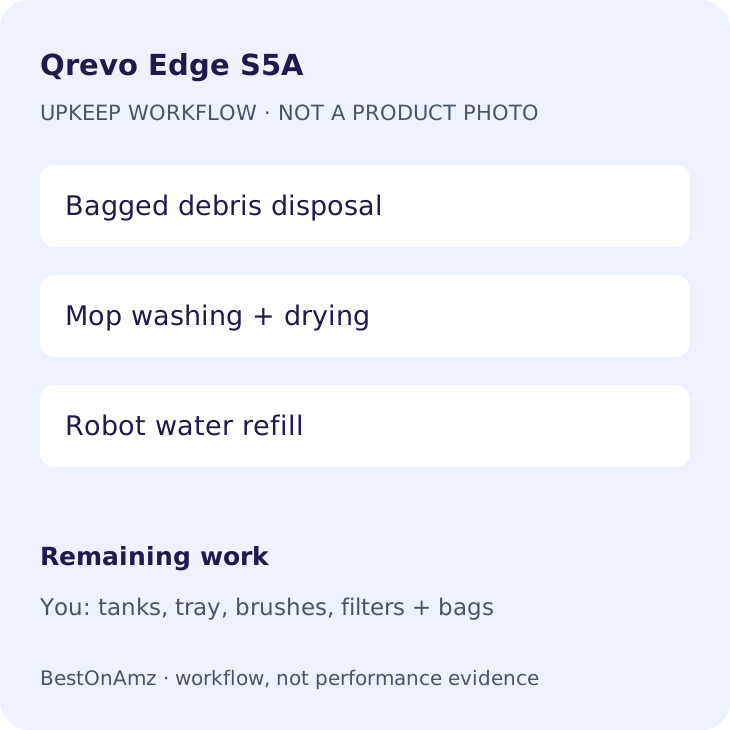
01 / Automate mop washing as well as debris disposal
Roborock Qrevo Edge S5A
B0DNDTP9CJ · vacuum and mop with bagged full-service dock
Consider the S5A when frequent hard-floor mopping makes pad washing and water handling worth automating.
- Dock empties vacuum debris into a disposable bag
- Dock washes and warm-air-dries mop pads
- Dock refills the onboard water tank
The trade-off: Vacuum Wars avoided only 6 of 24 obstacles with its purchased S5A. Clear cables, toys and small clutter; full mop automation is not evidence that it can safely navigate every mess.
View Roborock Qrevo Edge S5A on AmazonWhy we would choose it
Choose this workflow when you will use the mop regularly and can service the dock tanks, tray and consumables. Skip the extra water system if wet cleaning is already handled separately.
What the research says
Vacuum Wars reported 96% embedded-sand removal on medium-pile carpet and 0% wrap with 7-inch hair, but 78% flattened pet-hair pickup. Brush tangling and embedded hair removal are different tests. These results belong to that publisher and exact S5A, not every Qrevo Edge.
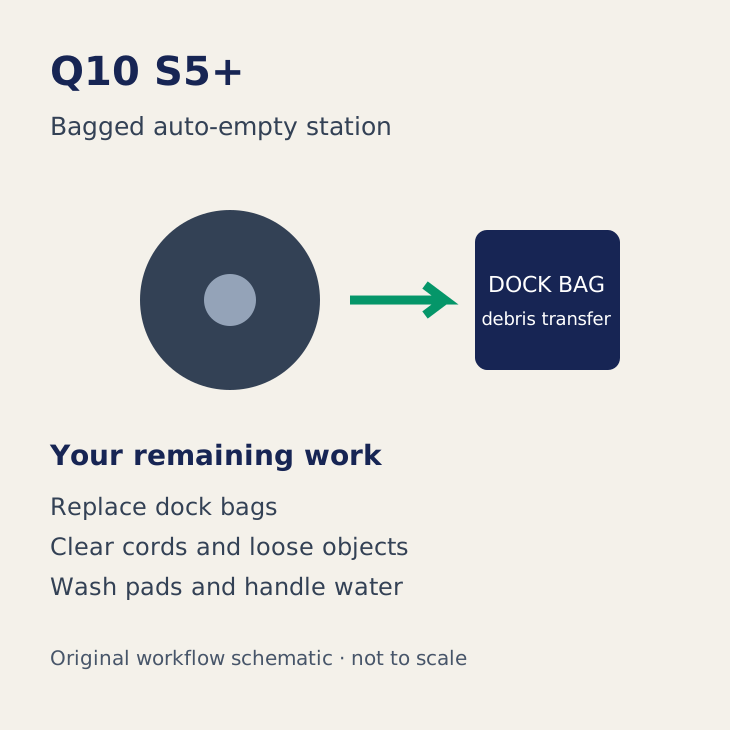
02 / Automate debris disposal; keep manual mop care
Roborock Q10 S5+
B0DWXBCQVP · black robot and bagged auto-empty station
Consider this configuration when manual bin emptying is the chore you want to reduce, while you are willing to handle the mop yourself.
- The plus configuration includes bagged automatic debris disposal
- VibraRise 2.0 mop and carpet lift are documented
- Mop washing, drying and water handling remain manual
The trade-off: An auto-empty station is not a mop-washing station. Vacuum Wars also scored this model 6/24 for obstacle avoidance; do not treat its sensor name as a clutter-handling guarantee.
View Roborock Q10 S5+ on AmazonWhy we would choose it
Choose the station for the specific emptying chore it removes. Use our separate under-$300 guide for dated budget evidence and charging-dock alternatives; this page does not promise a current price.
What the research says
Vacuum Wars found strong pickup and efficient controlled navigation. Tom’s Guide’s home test reported navigation and runtime problems. Different test contexts do not justify a universal navigation or reliability promise.
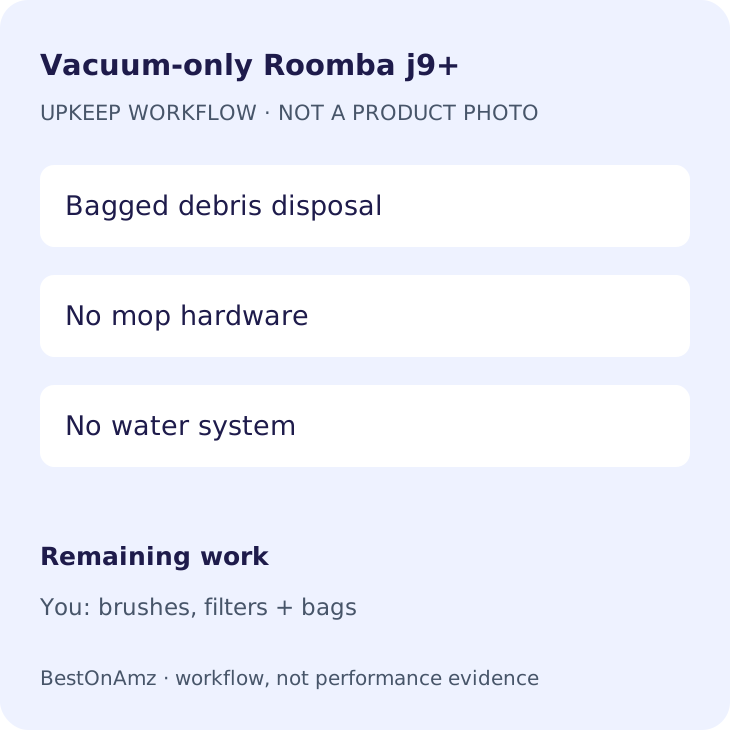
03 / Keep wet cleaning separate
iRobot Roomba j9+
B0C415NHBM · vacuum-only robot and bagged Clean Base
Consider the vacuum-only j9+ when you want bagged debris disposal without adding mop pads, water tanks and wet-dock chores.
- Clean Base automatically transfers vacuum debris into a bag
- Dual Multi-Surface Rubber Brushes are documented
- No mopping system to wash or refill
The trade-off: This j9+ does not mop. Dual rubber brushes are a documented feature, not independent proof that it beats the other models at pet-hair pickup.
View iRobot Roomba j9+ on AmazonWhy we would choose it
Choose this type of system if you already mop separately or do not need a robot mop. If pad washing is the chore you want removed, it cannot solve that job.
What the research says
iRobot identifies the vacuum-only j9+, rubber brushes and Clean Base with disposal bags. We have not established a controlled cleaning comparison against these Roborocks. Do not transfer Combo j9+ water-system features to this configuration.
Separate emptying the bin from washing the mop
Start by listing the job you repeat most: emptying vacuum debris, washing a dirty pad or carrying water. All three compared kits transfer debris into a disposable bag; only the S5A dock here washes and dries mop pads and refills the robot. The Q10 still leaves mop care to you; the j9+ has no mop.
Automatic robot refilling does not mean a permanently plumbed system. You still need access to the S5A dock tanks and tray. Leave room to service the station and check the delivered model’s installation instructions before ordering.
Good mapping is a different claim from avoiding a cable
A robot can map a room and clean efficiently while still catching small objects. The S5A independent obstacle result is weak despite its manufacturer’s marketing about avoiding floor preparation. Clear the route before scheduled runs rather than buying on that promise.
The Q10 independent tests also disagree about navigation in practice. We do not resolve that disagreement by selecting only the favorable review. None of the evidence presented here establishes safe unattended pet-mess avoidance.
For pet hair, ask which task was actually tested
Long hair wrapping around a roller, flattened hair remaining in carpet and general debris pickup are separate outcomes. The S5A review shows why a successful anti-tangle result cannot stand in for every pet-hair task.
Likewise, the j9+ brush design and bagged base can be relevant to upkeep, but they do not establish a best-for-pet-hair award. Compare exact-model tests on floors like yours and budget time for brush and filter care.
Choose the ownership routine before comparing the offer
Check compatible bag, filter, brush and mop supplies rather than assuming a self-empty station removes all consumables. Check seller, condition, included station and return terms on the exact listing. We do not quote a live Amazon price or guarantee stock.
Our budget guide compares Q7 L5 charging-dock and Q10 S5+ emptying-dock configurations with dated price observations. Our Roborock-versus-Roomba guide explains the exact S5A/j9+ configuration differences. Use those for the narrower decisions rather than treating this shortlist as every model on the market.
Before buying
Does every self-empty robot wash its mop?
No. In this comparison the S5A dock washes and dries pads; the Q10 S5+ dock empties debris only. The vacuum-only j9+ has no mop.
Is the most automated dock the best robot for every home?
No. It adds little value if you do not use its mop, and dock automation does not establish obstacle avoidance, carpet performance or reliability.
Do automatic emptying stations remove all upkeep?
No. These stations transfer debris into bags that need replacement. Brushes and filters still need care; a wet-cleaning system adds pad, water and dock chores. Follow the delivered model’s manual rather than a universal maintenance interval.
Will these run safely around loose toys or pet accidents?
This guide does not establish that promise. Clear small objects and messes, observe initial runs and follow the delivered model’s instructions.
Source trail
Reviewed October 15, 2026 from exact-model manufacturer documentation and attributed independent tests. BestOnAmz has not personally tested these robots. Specifications establish features, not a comparative cleaning winner. We do not personally test products.
Tom’s Guide Q10 S5+ home test ↗ (opens in a new tab)
Exact-model manufacturer links and independent tests are identified beside the relevant models. Workflow diagrams are original explanations, not product photographs or test results. These are researched recommendations; we have not personally tested these products. Product images may contain brand marketing and awards, which are not our findings. This is a comparison of three identified configurations, not a market-wide cleaning ranking. We omit unverified prices, star ratings and delivery promises. How we research · Amazon listing checklist