Find a batch-drip coffee maker that fits your routine.
These four current model paths answer different morning questions. Begin with the batch size, carafe, counter access, cleanup, and controls you actually need, then inspect a live offer against the documented model record.
Scope: batch-drip brewers only. This guide does not compare espresso, pod, or dedicated single-serve systems.
4 routine questionsGlass, thermal, timer, or batch-and-single.
Live offer checked separatelyConfirm the exact listing before you buy.
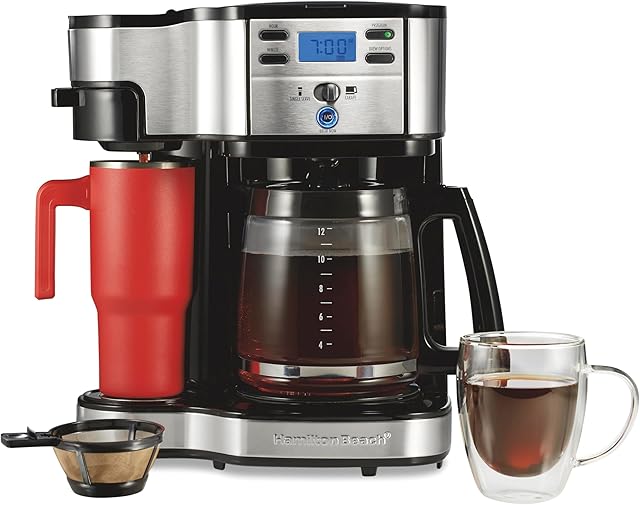
Illustrative coffee routine only - not a product photo, tested model, or endorsement.
Choose the routine question first
Four source records for four different mornings.
A useful starting point is a documented model that helps you evaluate a carafe, batch size, counter setup, or controls before a changing marketplace result enters the picture.
Compare the documented boundary before the listing.
Scroll the table on a small screen
Each cell summarizes the dated source record linked in the matching model section. It is a source summary, not a test by BestOnAmz or a claim about a live Amazon offer.
Up to 1.5 L / 10 cups with double-wall thermal carafeSingle and batch baskets; app scheduling and Brew Profiles are optional
Match the Aiden name, basket and carafe context, firmware or app expectations, included parts, seller, condition, return route, and warranty path.
Quick picks
Four coffee makers worth comparing first.
We recommend these four brewers as useful shopping starting points, but we do not personally test products. Prices, sellers and availability change; verify the exact model on Amazon.
Source trail
The detailed records below link current manufacturer documentation for batch size, carafe, dimensions and workflow. Those sources explain model context; they do not prove a live offer.
Affiliate disclosure: As an Amazon Associate I earn from qualifying purchases. These optional Amazon searches may show different models, sellers, carafes and terms. Match the written product name and configuration before buying. How affiliate links work
Pick 1
Simple premium batch brewing
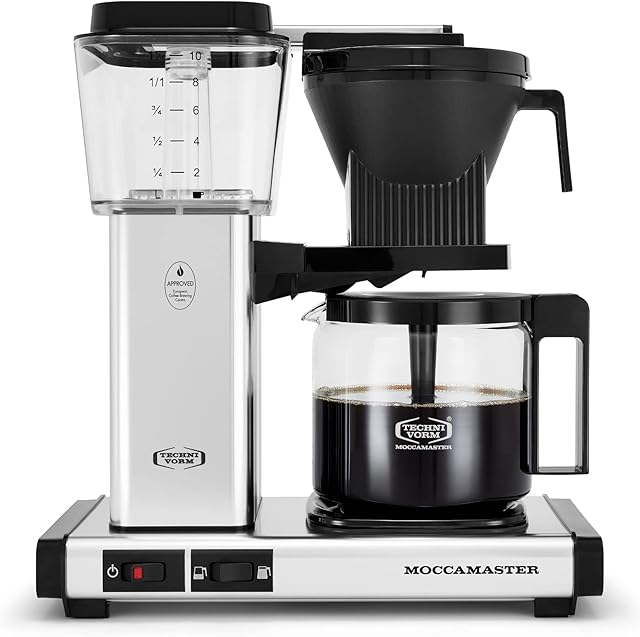
Technivorm Moccamaster KBGV Select
A straightforward glass-carafe choice for households that value a focused batch-brew workflow.
Affiliate link. Confirm the model, seller, condition, returns and warranty on Amazon.
Read the routine constraint, then inspect the exact record.
The source records explain the model-specific facts behind the recommendations. They do not compare every model or prove the details of a changing marketplace offer.
01Glass-carafe batch path
Moccamaster KBGV exact-model context
This record can help if: A 10-cup glass-carafe routine fits your household and you want to check the exact KBGV dimensions, drip-stop, auto-off, and warranty record before examining an offer.
Model boundary
KBGV glass-carafe configuration
What the sources establish
Documented brewer
KBGV glass-carafe batch brewer
Published capacity
1.25 L / 40 oz / 10 cups
Published routine
Automatic drip-stop and 100-minute auto-off
Moccamaster lists the KBGV as a 1.25 L / 40 oz / 10-cup glass-carafe brewer with automatic drip-stop and 100-minute auto-off.
The current product page lists 14 in H × 12.75 in W × 6.5 in D and a five-year warranty for the KBGV record.
Moccamaster's product page calls the KBGV SCA/ECBC certified; treat that as the manufacturer's statement for this exact product page, not a claim about every Moccamaster or marketplace variant.
Pause if: You need a thermal carafe, a different batch size, scheduled brewing, or the result does not clearly identify a KBGV rather than a related Moccamaster model.
Source trail
Source checked August 10, 2026. These links establish model context, not a marketplace offer.
Current first-party product record for the exact KBGV name; live retailer details remain listing-specific.
What it does not establish
That a current Amazon result is the same KBGV configuration or color, or its live ASIN, seller, price, included parts, return terms, warranty eligibility, condition, or availability.
Affiliate disclosure: As an Amazon Associate I earn from qualifying purchases. This optional Amazon search can contain different model and carafe configurations. Match the exact written model and terms yourself. How affiliate links work
This record can help if: An eight-cup thermal carafe and the documented optional single-serve basket fit your routine, counter footprint, and cleanup plan.
Model boundary
SKU 8718800 thermal configuration
What the sources establish
Documented brewer
OXO Brew 8-Cup Coffee Maker SKU 8718800
Published capacity
Eight cups with double-wall thermal carafe
Published routine
Optional single-serve basket and cleaning mode
OXO lists SKU 8718800 with an eight-cup capacity, a double-wall vacuum-insulated thermal carafe, and an optional single-serve brew-basket accessory.
The current page lists a Rainmaker showerhead, integrated bloom cycle, cleaning mode, and dimensions of 13.5 × 10.5 × 7 in.
OXO describes this exact product page as SCA certified. Do not carry that manufacturer statement to a different OXO SKU or a retailer listing without an exact match.
Pause if: You need a larger batch, a different OXO generation, or a result that cannot be matched to SKU 8718800 and its listed accessory context.
Source trail
Source checked August 10, 2026. These links establish model context, not a marketplace offer.
Current first-party context for SKU 8718800 and its listed thermal-carafe configuration.
What it does not establish
That a current Amazon result is SKU 8718800, that its included single-serve accessory is present, or its live ASIN, seller, price, condition, return terms, warranty eligibility, or availability.
Affiliate disclosure: As an Amazon Associate I earn from qualifying purchases. This optional Amazon search can contain different model and carafe configurations. Match the exact written model and terms yourself. How affiliate links work
This record can help if: A 12-cup thermal carafe, removable water tank, delayed start, and documented custom-brew controls are questions you want to compare against your day-to-day routine.
Model boundary
Luxe Brewer Thermal BDC465
What the sources establish
Documented brewer
Luxe Brewer Thermal BDC465
Published capacity
60 fl oz / 12 cups with dual-wall thermal carafe
Published routine
Delayed start plus listed bloom, temperature, and flow controls
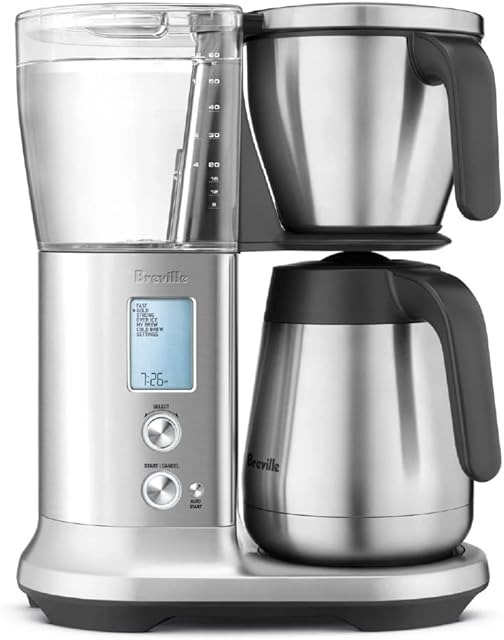
Breville lists a removable 60 fl oz / 12-cup water tank and a dual-wall thermal carafe for the Luxe Brewer Thermal BDC465.
The product page describes cone and flat-bottom filter options, delayed start, and custom bloom volume, bloom time, temperature, and flow-rate controls.
Breville lists 16.1 × 10.2 × 6.8 in and a two-year repair, replacement, or refund warranty for this current product record, subject to its terms.
Pause if: You need a glass-carafe version, a simpler interface, a smaller capacity, or a result that does not explicitly identify the Luxe Brewer Thermal BDC465.
Source trail
Source checked August 10, 2026. These links establish model context, not a marketplace offer.
Current first-party record for the exact Luxe Brewer Thermal BDC465 model; do not transfer these facts to another Breville configuration.
What it does not establish
That a current Amazon result is the Thermal BDC465 rather than a glass or discontinued Breville model, or its live ASIN, seller, price, included parts, condition, return terms, warranty eligibility, or availability.
Affiliate disclosure: As an Amazon Associate I earn from qualifying purchases. This optional Amazon search can contain different model and carafe configurations. Match the exact written model and terms yourself. How affiliate links work
This record can help if: You want to inspect the Aiden's documented batch and single-serve basket setup, thermal carafe, and app-profile workflow while knowing the manufacturer says it works without the app.
Model boundary
Fellow Aiden Precision Coffee Maker
What the sources establish
Documented brewer
Fellow Aiden Precision Coffee Maker
Published capacity
Up to 1.5 L / 10 cups with double-wall thermal carafe
Published routine
Single and batch baskets; app scheduling and Brew Profiles are optional
Fellow lists up to 1.5 L / 10 cups, a double-wall thermal carafe, removable water tank, and both single-serve and batch-brew basket context for Aiden.
Fellow says the Aiden app can manage scheduling and Brew Profiles, and its FAQ says the brewer works without the app.
The current product page lists 8 15/16 × 8 15/16 × 12 in and a two-year standard warranty with an option to extend.
Pause if: You want a purely analog workflow, need a different capacity, or the result cannot be matched to the exact Aiden system and its included parts.
Source trail
Source checked August 10, 2026. These links establish model context, not a marketplace offer.
Current first-party record for the exact Aiden name and its stated app-optional workflow.
What it does not establish
That a current Amazon result includes the same baskets, profile support, firmware state, color, seller, price, warranty eligibility, condition, return terms, or availability as the first-party record.
Affiliate disclosure: As an Amazon Associate I earn from qualifying purchases. This optional Amazon search can contain different model and carafe configurations. Match the exact written model and terms yourself. How affiliate links work
Plan the coffee routine that happens after the listing looks good.
This is not a generic feature checklist. It is a practical pass over serving time, counter access, cleanup, and the exact offer that will shape daily use.
01
Decide when the coffee will be served
A glass carafe, thermal carafe, and delayed start create different routines. Think through whether coffee is poured immediately, shared over time, or prepared before anyone is awake.
02
Measure counter access
Account for water-fill space, cabinet clearance, carafe removal, filter access, cord path, and the room needed to clean and refill the brewer.
03
Make filters and cleanup tangible
Basket shape, paper filters, removable parts, and cleaning steps are part of the everyday setup. Check the exact model documentation before assuming an accessory is included.
04
Keep the live offer separate
A source record only helps if the exact model, carafe, included parts, seller, condition, return terms, and warranty path match the listing you are considering.
01Match the exact model name, carafe type, capacity, and included baskets or accessories to the source record you actually read.
02Measure counter depth, overhead clearance, water-fill access, carafe removal, and the place where filters and cleaning supplies will live.
03Confirm the listing's seller, condition, return route, support path, and warranty eligibility; manufacturer documentation does not settle marketplace details.
04Check the live price, shipping, availability, and any discount at the destination. None are represented as facts on this page.
Research notes
What this guide can—and cannot—answer.
We recommend these four brewers as useful shopping starting points, but we do not personally test products. The page separates current manufacturer facts from the mutable details of a live marketplace result.
A source record is not proof that a current Amazon ASIN, seller, configuration, warranty, or offer matches the record. Use the source trail to understand the named model, then confirm the exact carafe, included parts, seller, condition, return route, warranty eligibility, price, and availability on the result you are considering.
Why are there four model paths instead of a score-based list?
The useful differences here are batch size, carafe, workflow, counter access, and exact model identity. These four named records are current first-party starting points; they do not establish one universal fit.
Can a manufacturer page prove a current Amazon offer?
No. A product page documents a named model. It does not prove the live seller, condition, included parts, price, return terms, warranty eligibility, or that a retailer result is the same configuration.
Why do the Amazon buttons open searches rather than one product listing?
A current result can vary by model, carafe, included parts, seller, condition, and terms. An exact-model search keeps those mutable details visible instead of presenting one ASIN as if it had been pre-checked.