Brew it or stir it?
Best mushroom coffee on Amazon
Start with the cup you want. Choose Four Sigmatic ground coffee for your brewer, or compare Original and RYZE for an instant drink with less stated caffeine.
By BestOnAmz Research Desk · Last reviewed
Compare the three options ↓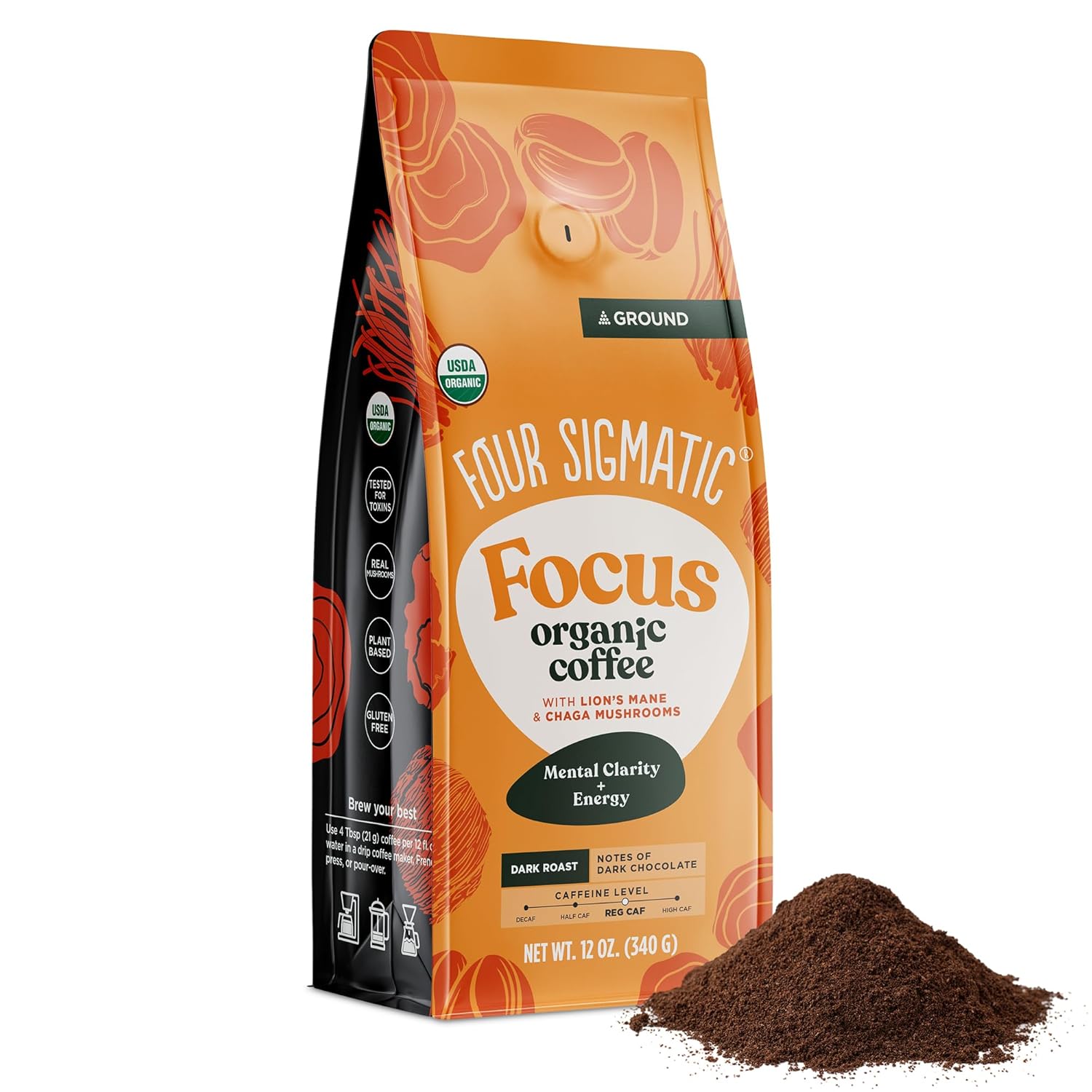
Three practical buying roles
Which mushroom coffee should you choose?
Our shortlist compares preparation, labeled caffeine and ingredients. It is not a taste-test ranking or a ranking of health benefits. The ground coffee suits a brewing routine; the two instant blends suit a scoop-and-stir routine. None is caffeine-free.
01 / For a brewed-coffee routine
Four Sigmatic Focus Ground Coffee
Dark roast · 12 oz bag
Our starting point if you already use a drip brewer, French press or pour-over and want to keep brewing coffee.
- Ground coffee that requires brewing
- Coffee with lion’s mane and chaga extracts
- Manufacturer estimates about 150 mg caffeine per 12 oz cup
The trade-off: This is regular-caffeine coffee. Choose one of the instant options below if a lower stated caffeine amount is your priority.
View Four Sigmatic Focus Ground Coffee on AmazonWhy we would choose it
Choose this format for your existing brewer. Use the amount of grounds you actually brew when comparing costs; a small advertised serving is not necessarily your normal mug.
Format and label details
The official dark-roast page specifies ground format and a 12 oz preparation. Caffeine varies with dose and brewing. “Focus” is the product name, not our finding of a cognitive benefit.
02 / For a scoop-and-stir cup
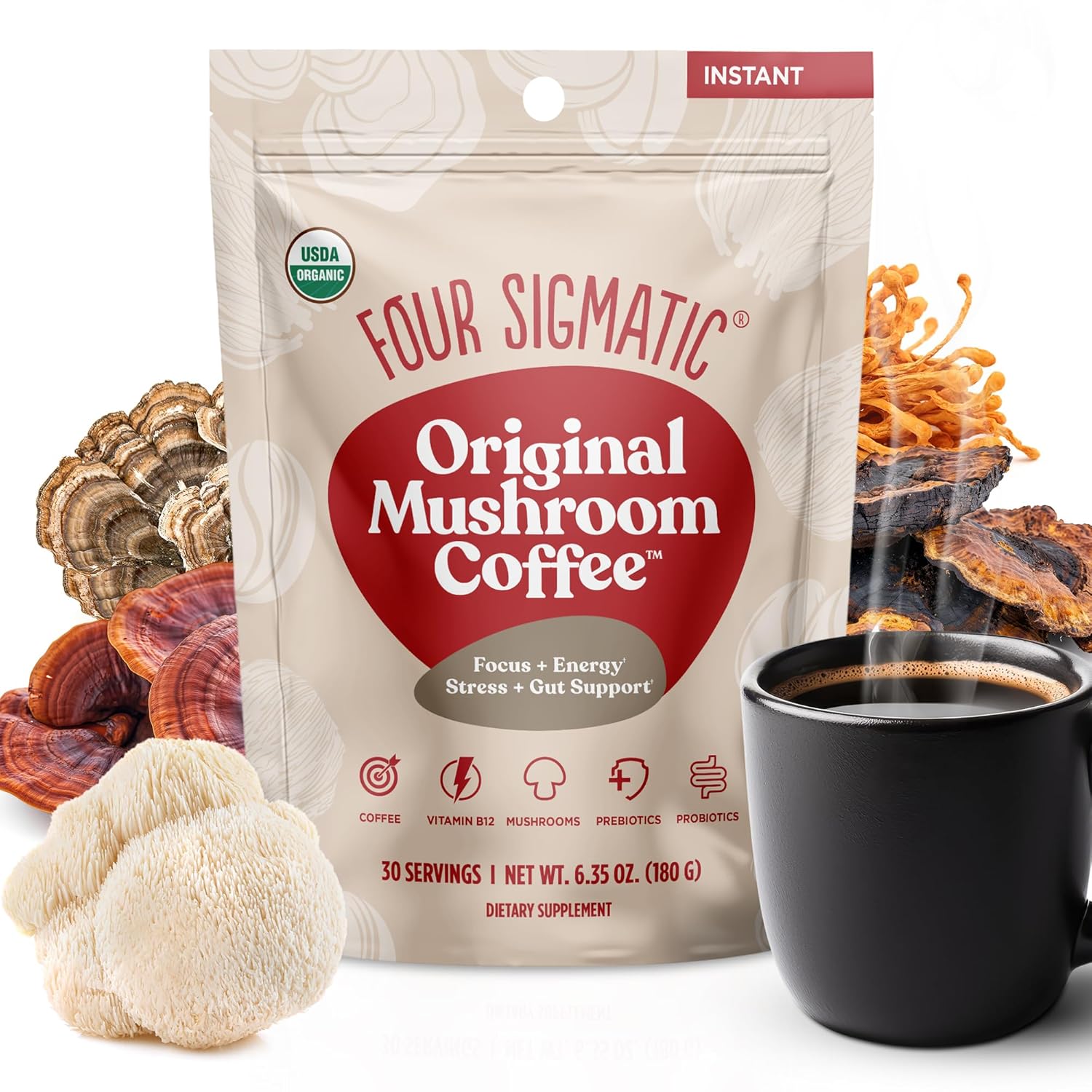
Four Sigmatic Original Mushroom Coffee
Classic roast instant · 30-serving pouch
An instant option with a lower stated caffeine amount than the ground coffee above and no brewer to clean.
- One tablespoon mixed with 8 fl oz hot water
- Manufacturer lists approximately 50 mg caffeine per serving
- Thirty labeled servings per pouch
The trade-off: It is a broader formula than the ground coffee, including coconut milk powder, yacon, vitamin B12 and probiotics. Check the full label if you avoid particular ingredients.
View Four Sigmatic Original Mushroom Coffee on AmazonWhy we would choose it
Consider it when preparation convenience matters most. Start with a single pouch and a one-time order if you are unsure whether this style of drink suits you.
Format and label details
Four Sigmatic names lion’s mane, chaga, cordyceps, reishi and turkey tail. More ingredients do not establish better results. Original and Focus instant packets are different purchases.
03 / An alternative instant blend
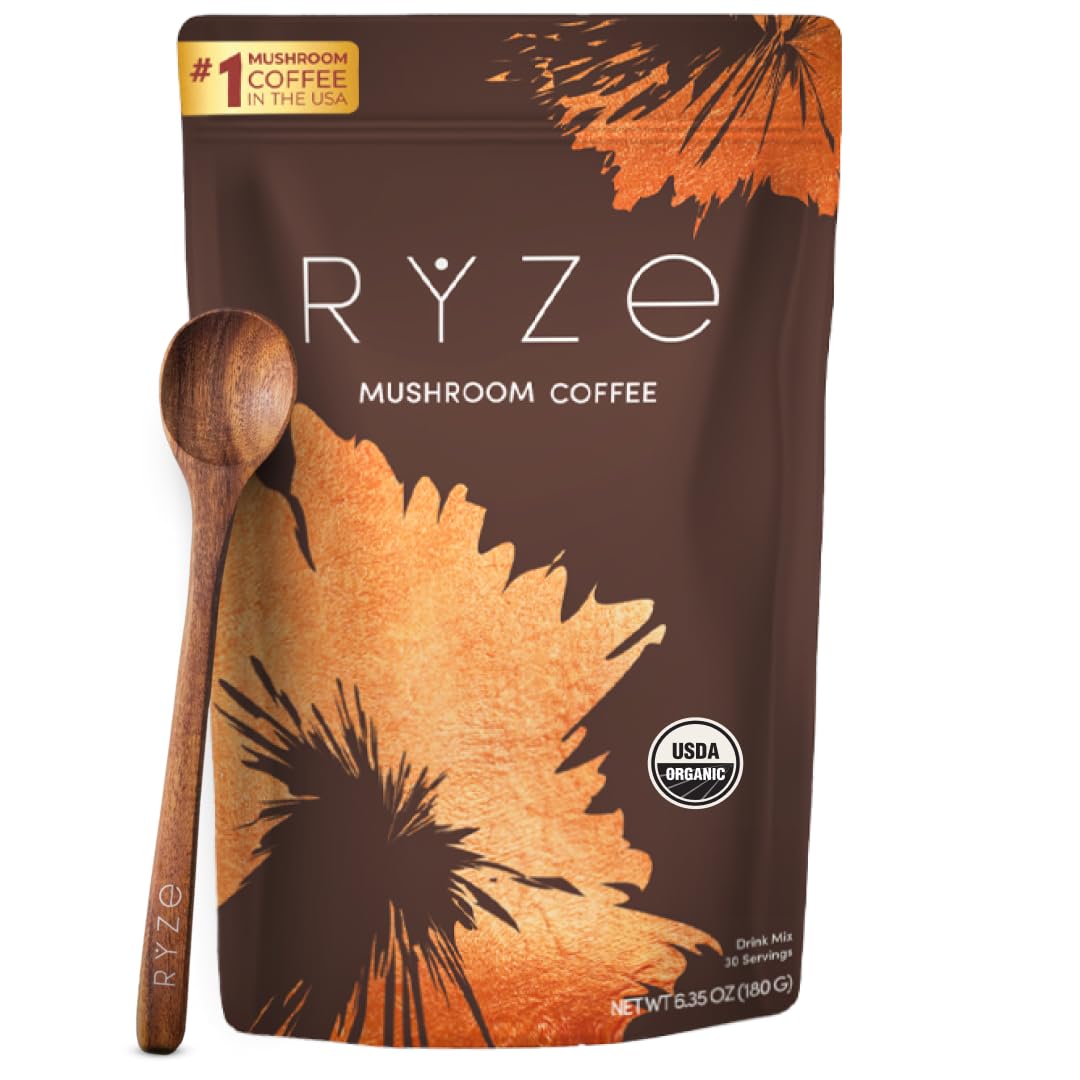
RYZE Mushroom Coffee
Medium roast · 30 servings
The other instant blend to compare if you are choosing between RYZE and Four Sigmatic rather than shopping for ground coffee.
- Instant preparation without a coffee maker
- Brand lists approximately 48 mg caffeine per cup
- Six named mushrooms in the brand’s SUPER6 blend
The trade-off: The 48 mg versus 50 mg figures are approximate brand figures, not a meaningful reason by themselves to prefer one instant blend. Check the selected medium-roast label.
View RYZE Mushroom Coffee on AmazonWhy we would choose it
Compare the complete ingredient panels and delivered cost per serving with Four Sigmatic Original. We would choose on those practical differences, rather than counting mushrooms or promising a better health outcome.
Format and label details
RYZE names cordyceps, lion’s mane, reishi, shiitake, turkey tail and king trumpet. Ingredient count alone does not tell you the dose of each mushroom or the effect of the finished drink.
Caffeine and format at a glance
These are manufacturer figures for the stated serving, not our lab measurements. Swipe the table on mobile.
| Coffee | Preparation | Stated caffeine | Main buying distinction |
|---|---|---|---|
| Four Sigmatic Focus Ground Coffee | Brewed grounds | About 150 mg / 12 oz cup | For a brewed-coffee routine |
| Four Sigmatic Original Mushroom Coffee | Instant powder | About 50 mg / serving | For a scoop-and-stir cup |
| RYZE Mushroom Coffee | Instant powder | About 48 mg / cup | An alternative instant blend |
Compare the cost of your actual cup
Instant: count usable servings
Divide the delivered price by the servings you will make. For example, a hypothetical $30 pouch with 30 servings costs $1 per labeled serving. Using twice the serving amount makes 15 cups and doubles that cost. This example is not a current product price.
Ground: use your brewing dose
A 12 oz bag contains about 340 g of grounds. At a hypothetical 20 g dose it makes about 17 brews. Divide the bag’s delivered price by that number, then adjust for your own recipe and mug size.
Check the recurring price
Compare one-time and subscription offers separately. A first-order discount does not establish the refill price. Confirm quantity, seller, delivery and return terms before accepting a recurring order.
Before buying
What matters beyond the brand?
Is mushroom coffee healthier?
We would not pay extra on that assumption. Cleveland Clinic’s dietitian explains the limited evidence behind mushroom-coffee health claims. Research about an ingredient does not establish what a finished drink will do. We do not recommend these products to treat a condition or promise focus, immunity or weight-loss results.
Does it have less caffeine?
Some blends do. The two instant options here have lower stated figures than the ground coffee, but “mushroom coffee” alone does not tell you the amount. Match the exact formula and serving. If reducing caffeine is your only goal, compare ordinary decaf or half-caf coffee before paying for added ingredients.
Who should check with a clinician first?
Cleveland Clinic flags potential digestive issues and concerns around chaga for people with kidney problems or kidney stones. Discuss suitability with your clinician if those apply. If you take medicines, are pregnant or breastfeeding, check the complete formula with a clinician or pharmacist rather than relying on a brand’s blanket safety claim.
Why only these three?
They provide two preparation formats and a direct Four Sigmatic-versus-RYZE choice with identifiable products and published caffeine guidance. We have not tested flavor, dissolved texture or long-term effects. A shorter ingredient list, a cheaper ordinary coffee or no purchase may suit you better than a broader blend.
Source trail
We do not personally test products. Manufacturer pages linked with each option support format, ingredient and caffeine descriptions. Cleveland Clinic provides independent health context; it does not endorse this shortlist. Product images contain brand marketing, which is not our evidence of health benefits.
Reviewed October 11, 2026. Amazon titles and selected variants were matched to the three named products. Formulas, packaging, prices and availability can change; use the current package label before consuming. No star ratings or live price claims are used. How we research and choose.
Prefer a conventional brewing setup? Compare batch-drip coffee makers →