Mighty Patch Original or COSRX Original?
Pimple patches: choose the size and pack you will use
Mighty Patch Original offers one 12 mm size. COSRX Original offers three sizes in each pouch. Start with the coverage you need, then compare the cost of patches you will actually use rather than the largest number on the box.
By BestOnAmz Research Desk · Last reviewed
Compare the options ↓The decision at a glance
Choose Hero if a consistent 12 mm patch suits your routine. Consider COSRX if you want a mix of sizes and will use the assortment. Neither pack count nor a manufacturer claim establishes which product will work better on your skin.
| Buying decision | Mighty Patch Original | COSRX Original |
|---|---|---|
| Selected Amazon pack | 36 patches | 96 patches: four 24-count pouches |
| Size choice | One size: 12 mm | Small, medium and large |
| Assortment | 36 of the same size | Per pouch: 10 small, 5 medium, 9 large |
| Label directions | Clean, dry skin; remove after 6–8 hours | Clean the area; choose a patch larger than the spot |
| Value question | Will you use the single size? | Will you use all three sizes? |
Scroll the table horizontally on a small screen.
The models we would compare
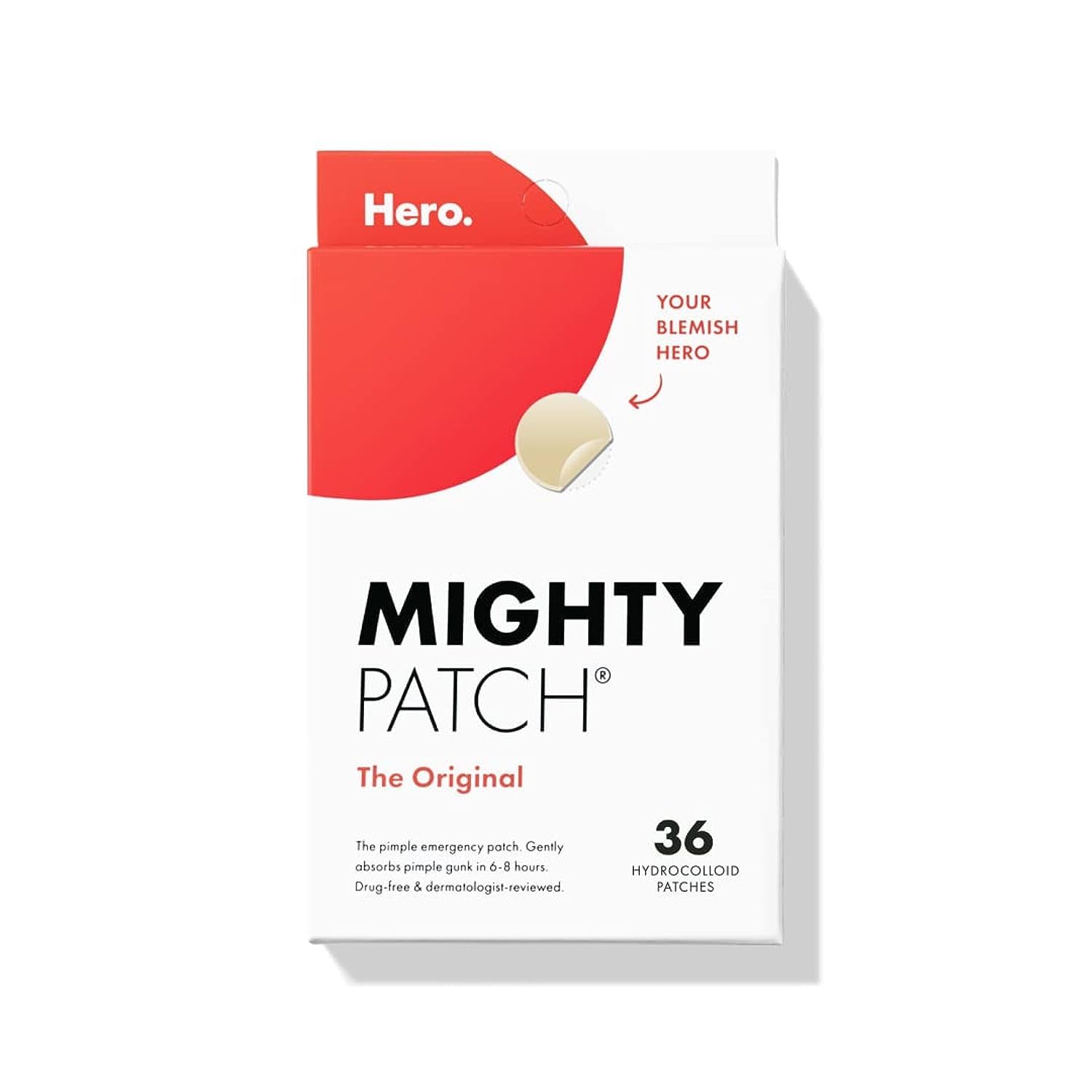
01 / For a consistent patch size
Hero Mighty Patch Original
Original · 36-count · 12 mm
A single-size pack that makes the quantity comparison straightforward.
- 36 patches in the selected listing
- 12 mm diameter documented by Hero
- Simple one-size replenishment
The trade-off: One diameter may not suit every spot. The labeled wear interval does not guarantee adhesion on every skin type.
View Hero Mighty Patch Original on AmazonWhy we would choose it
Start here if 12 mm is the size you normally use and you prefer not to accumulate spare sizes.
Manufacturer label details
Hero identifies Original as hydrocolloid and lists 36 patches in the selected pack. Its instructions say to apply to clean, dry skin and remove after 6–8 hours. We have not tested wear or absorption.
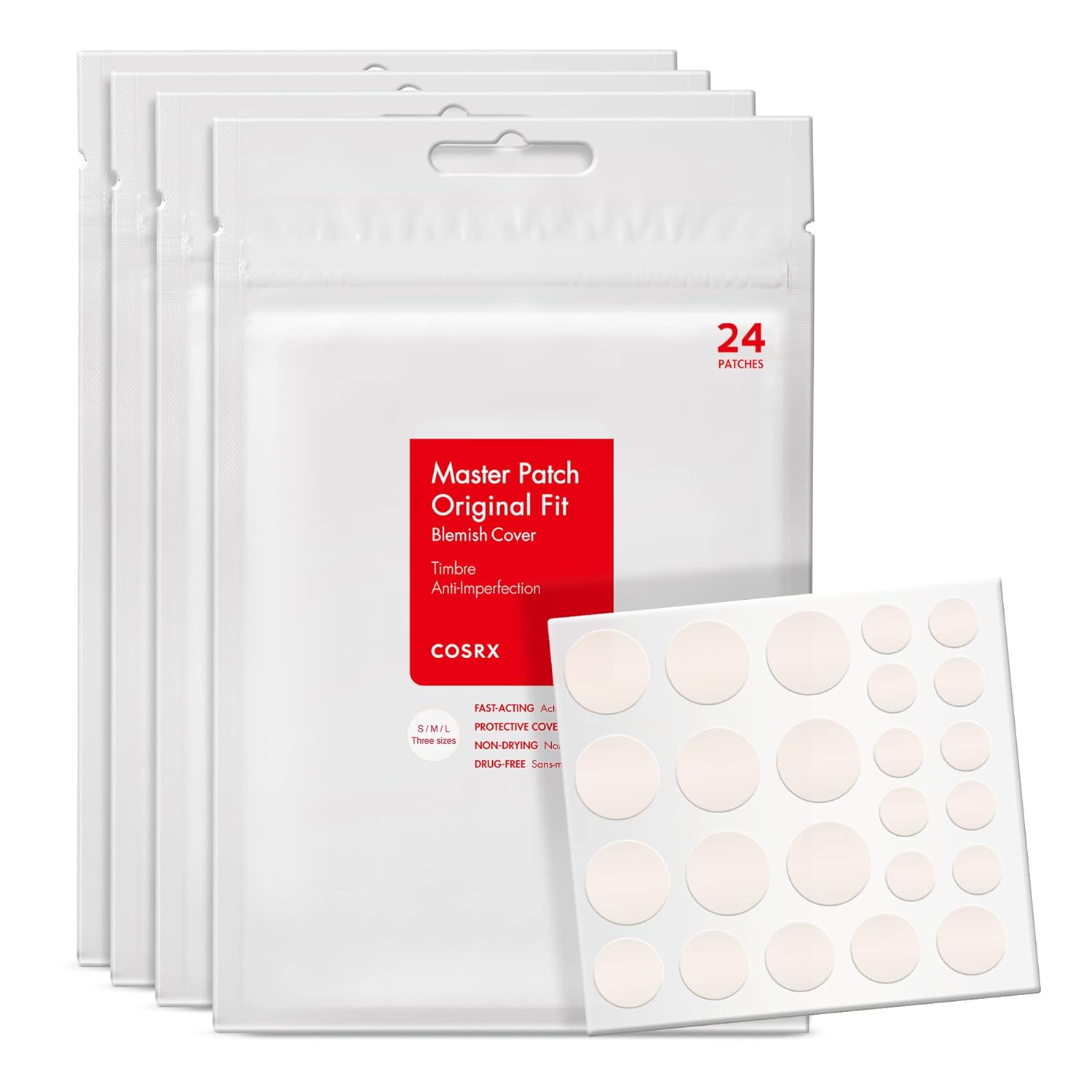
02 / For a mix of patch sizes
COSRX Original hydrocolloid patches
Original · selected 96-count multipack
A mixed-size alternative when different coverage sizes are useful to you.
- Three sizes per pouch
- 24 patches per manufacturer pouch
- Selected Amazon listing totals 96 patches
The trade-off: The official single pouch has 24 patches; the selected Amazon offer is a multipack. Do not compare their prices without checking the total quantity.
View COSRX Original hydrocolloid patches on AmazonWhy we would choose it
Compare this if you will use the assortment. If you only use large patches, calculate the cost of those usable patches before calling the bigger pack better value.
Manufacturer label details
COSRX lists 10 small, 5 medium and 9 large patches per 24-count pouch, and instructs shoppers to choose a patch larger than the spot after cleansing. Its page supports pack details, not superiority over Hero.
Compare cost per usable patch
Divide the delivered total by the number of patches you expect to use. For Hero’s selected pack, that is 36 if its single size works for you. For the selected four-pouch COSRX pack, all sizes total 96; large patches alone total 36. A lower cost per patch is less useful when much of the assortment stays in the drawer.
Use the current checkout price after shipping and any subscription conditions. We do not publish a fixed price, discount or cheapest-brand claim. Check the selected quantity each time because listings and variations can change.
Keep Original separate from other variants
These links identify the Original hydrocolloid products. Invisible, surface, microneedle and other active-ingredient variants need their own ingredient and instruction checks. A review of one formula is not evidence for another.
Read the current package and ingredient list before application, especially if you have a known sensitivity. Do not infer that a plain hydrocolloid label guarantees irritation-free wear. Follow the product directions and stop using a product that irritates your skin.
A patch is not a diagnosis
The American Academy of Dermatology advises against picking or squeezing a deep, painful pimple because of infection, discoloration and scarring risks. Its guidance includes hydrocolloid patches as a way to protect skin and support healing; it does not endorse either product here.
Do not puncture a spot to make a patch work. If deep, painful pimples persist or you have several, the AAD recommends seeing a board-certified dermatologist. This shopping comparison cannot establish a treatment plan or a winner for cystic acne.
What this comparison cannot tell you
We have not measured absorption, adhesive strength, visibility under makeup, healing time or outcomes on different skin types. Manufacturer before-and-after photographs and wear-time statements are not our test results.
Choose between these packs by verified format and your own size needs. If the main question is how to treat ongoing acne, that requires different evidence from a pack-size comparison.
Before buying
Is the COSRX listing 24 or 96 patches?
The manufacturer describes a 24-count pouch. The Amazon title checked for the linked ASIN says 96 count, with four pouches shown. Confirm the selected total before checkout.
Which patch is best for cystic acne?
These sources do not establish a clinical winner. Persistent or multiple deep, painful pimples warrant dermatology advice rather than choosing a brand from an absorption claim.
Does overnight mean it will stay on all night?
No. Hero gives a 6–8 hour removal interval; we have not independently tested adhesion. Follow the current instructions for your exact product.
Source trail
Reviewed October 11, 2026. Amazon titles and product images were checked for Hero Original 36 count and COSRX Original 96 count. Manufacturer pages support size, quantity and directions; AAD supplies separate general skin-care context. This is a shopping-format comparison, not hands-on testing or a clinical efficacy review. No unsupported ratings, prices, wear rankings or treatment promises are used.
American Academy of Dermatology: deep, painful pimple guidance ↗ (opens in a new tab)
Manufacturer and independent-review links appear beside each model. These are researched recommendations; we have not personally tested these products. Product images may contain brand marketing and awards, which are not our findings. Two plain hydrocolloid options with verified pack details; this is not a clinical ranking of acne treatments. We omit unverified prices, star ratings and delivery promises. How we research · Amazon listing checklist