Brightness is only half the decision
65-inch TVs for bright rooms: diagnose the glare first
Compare Hisense U8QG for strong indirect-daylight brightness and central seating, or LG G5 when OLED contrast, wider seating and reflection handling justify the premium. First identify where the light hits the screen.
By BestOnAmz Research Desk · Last reviewed
Compare the options ↓The decision at a glance
A bright room can mean diffuse daylight, a reflected window or sunlight falling directly on the panel. Those are different problems. More brightness can help the first; placement and light control are essential for the others.
| Room situation | First move | Model direction |
|---|---|---|
| Diffuse daylight; mostly central seats | Reduce ambient light where practical | Compare Hisense U8QG |
| Wide seating; films after sunset too | Check picture consistency from side seats | Compare LG G5 OLED |
| Window reflected opposite the sofa | Move or shade the light source | G5 reflection handling is worth comparing; no glare-free promise |
| Direct sunlight on the panel | Change placement or block sunlight | Neither is a substitute for controlling direct sun |
Scroll the table horizontally on a small screen.
The models we would compare
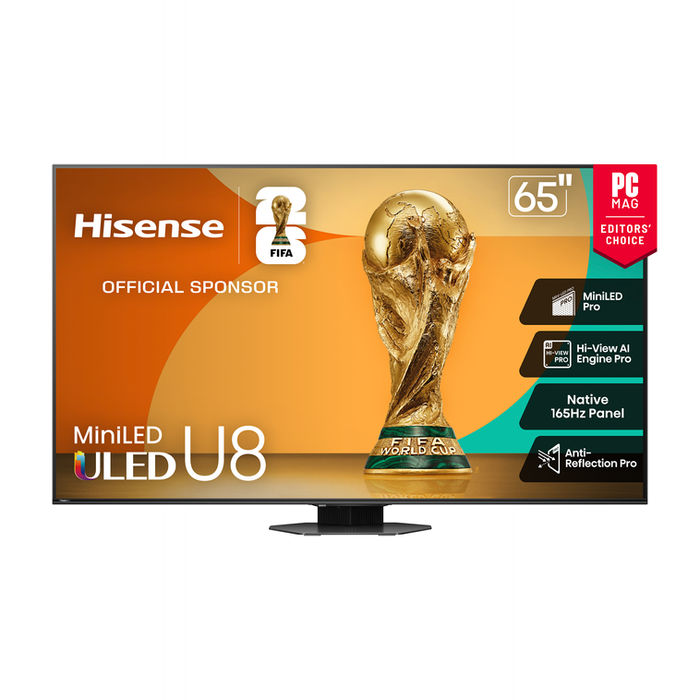
01 / Indirect daylight and central seats
Hisense U8QG
65U8QG · 65-inch · 2025
A bright Mini-LED alternative for daytime viewing when your seats are mostly in front of the screen.
- High brightness for rooms with indirect daylight
- Mini-LED backlight with local dimming
- Google TV; three HDMI 2.1 inputs and up to 4K/165Hz
The trade-off: Less consistent from the sides, with blur in fast motion. Brightness does not eliminate direct reflections or backlight blooming.
View Hisense U8QG on AmazonWhy we would choose it
Our starting comparison for a centrally seated daytime viewer. Choose it only after checking the reflected window positions and accepting the motion and viewing-angle compromises.
What the research says
RTINGS tested 65 inches and reports high brightness, but narrower viewing angles and slower pixel transitions. Its USB-C display input lacks VRR; use HDMI for that feature.
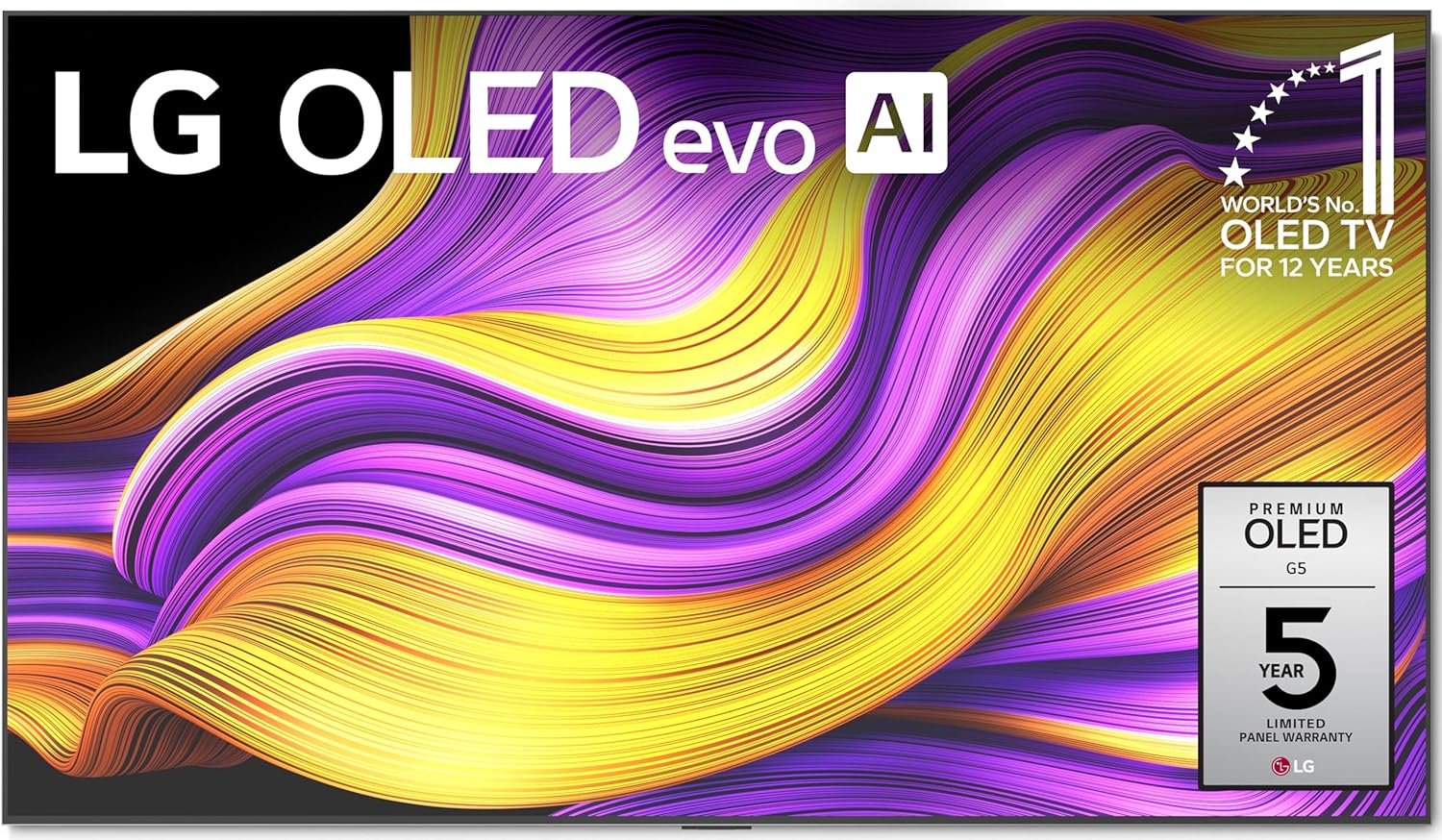
02 / Wide seating and reflection handling
LG G5 OLED
OLED65G5WUA · 65-inch · 2025
For viewers who want OLED contrast with more brightness and stronger handling of room reflections.
- OLED contrast and a wide viewing angle
- Strong brightness and reflection handling in independent testing
- Four HDMI 2.1 inputs; up to 4K/165Hz with a compatible PC
The trade-off: This US package supplies a wall mount. Budget for a compatible stand if your setup needs one. Slow movie pans can show OLED stutter.
View LG G5 OLED on AmazonWhy we would choose it
Compare the G5 when you need side-seat consistency and also watch films after dark. Include a stand in the total if needed: this exact package is intended for wall mounting.
What the research says
RTINGS reports deep blacks, high brightness and wide viewing angles. It tested 77 inches and says the findings apply to 65 inches. LG identifies this model as the wall-mount package.
Do the black-screen reflection check
Before shopping, turn your current screen off at the time you normally watch. From each seat, note whether you see a distinct window, lamp or bright doorway. That identifies a direct reflection problem rather than simply a dim picture.
Try a different lamp position or a curtain before committing to a television upgrade. A room-layout change can address the source of glare. Neither shortlisted screen is described here as reflection-free, and turning brightness up does not erase a reflected window.
Match the daytime seat pattern
If everyone sits near the center, the U8QG is a useful Mini-LED option to compare. If people regularly sit off to the sides, the G5’s wider-viewing OLED design becomes more relevant. Measure the seats you actually use rather than planning around an occasional guest.
Sport adds a separate motion question. A bright image can still show blur or artifacts in fast play. Do not choose solely from a brightness headline or assume a higher refresh-rate number guarantees clearer broadcast sport.
Account for evening viewing and installation
A room used for daytime news and evening films needs two kinds of performance. Compare the premium OLED’s dark-scene advantage with the actual price gap. If the room can be dimmed easily, an all-round option from our main shortlist may be enough.
The selected 65-inch G5 is LG’s wall-mount package. If you need furniture placement, identify the compatible stand and its cost before comparing totals. Check wall, bracket, cable access and installer requirements separately from picture quality.
Keep direct sunlight off the screen
A television purchase is not a substitute for controlling sun falling on the panel. Change the screen position or use blinds to remove that exposure. Compare the picture again after addressing the room; the expensive model may no longer be necessary.
Before buying
Is every QLED better than OLED in daylight?
No. Brightness and reflection handling vary by model. A bright OLED can be a better fit than a weaker LCD when seating and reflected light matter.
Which is best opposite a window?
Start by shading or moving the reflected light source. The G5 is worth comparing for reflection handling, but we do not promise it will make an unshaded window disappear.
Does a matte screen solve everything?
No. Screen finish changes how light is reflected; it does not remove the light. Evaluate the exact model’s reflection behavior and room contrast instead of shopping from the finish label alone.
Do I need the G5 for a room with blinds?
Possibly not. If effective blinds solve the glare and your seats are central, compare lower-cost options and the main C5 shortlist before paying for the premium model.
Source trail
Reviewed October 11, 2026. This shortlist uses manufacturer identification and attributed RTINGS assessments of G5 and U8QG. G5 testing used 77 inches with 65-inch applicability; U8QG testing used 65 inches. Room-layout advice is a practical decision process, not a measured test of your room or a promise that brightness fixes direct sunlight.
Manufacturer and independent-review links appear beside each model. These are researched recommendations; we have not personally tested these products. Product images may contain brand marketing and awards, which are not our findings. These are identified 2025 models, not a claim to cover every 2026 release. We omit unverified prices, star ratings and delivery promises. How we research · Amazon listing checklist